Animals / Mammal
West Indian manatee
Trichechus manatus · Trichechidae
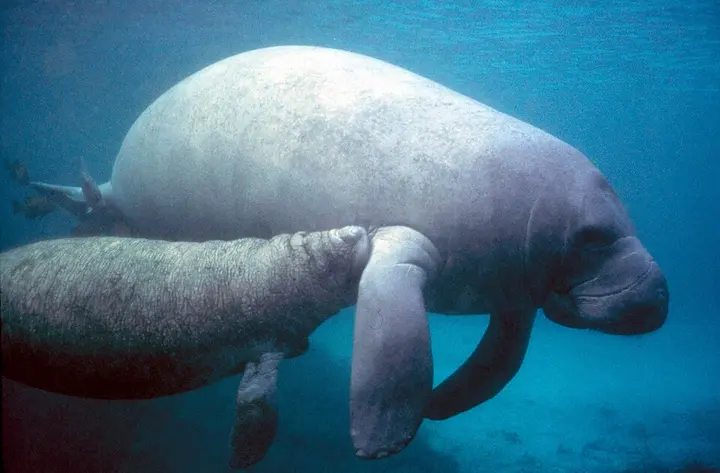
The West Indian manatee, also known as the North American manatee, is a large, aquatic mammal native to warm coastal areas of the Caribbean, from the Eastern United States to northern Brazil. Living alone or in herds, it feeds on underwater plants and uses its whiskers to navigate. It is divided into two subspecies, the Florida manatee in the United States and the Antillean manatee in the Caribbean, both of which are endangered and face pressure from habitat loss, pollution, and other human activity.
Where the West Indian manatee lives
Recorded in Brazil and United States of America (South America and North America).
Most records fall in Florida, Sergipe, Alagoas, Rio Grande do Norte and Ceará.
See the West Indian manatee’s range on the globe
Conservation status
Vulnerable (VU). At risk: it could become endangered. Categories are the IUCN Red List as republished by GBIF.
Sources
The range is a density of 161,439 georeferenced GBIF records, not an expert-drawn map. Description from Wikipedia.