Animals / Reptile
Common box turtle
Terrapene carolina · Emydidae
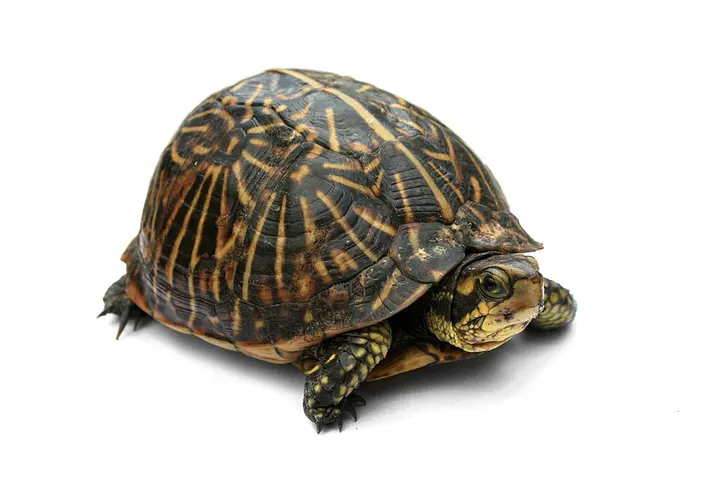
The common box turtle is a species of box turtle with five existing subspecies. It is found throughout the Eastern United States and Mexico. The box turtle has a distinctive hinged lower shell that allows it to completely enclose itself, like a box.
Its upper jaw is hooked. The turtle is primarily terrestrial and eats a wide variety of plants and animals. The females lay their eggs in the summer. Turtles in the northern part of their range hibernate over the winter. Common box turtle numbers are declining because of habitat loss, roadkill, and capture for the pet trade. The species is classified as vulnerable to threats to its survival by the IUCN Red List. Two states have chosen subspecies of the common box turtle as their official state reptile: T. c. carolina in North Carolina and Tennessee.
Appearance
The common box turtle (Terrapene carolina) gets its common name from the structure of its shell which consists of a high domed carapace (upper shell), and large, hinged plastron (lower shell) which allows the turtle to close the shell, sealing its vulnerable head and limbs safely within an impregnable box. The carapace is brown, often adorned with a variable pattern of orange or yellow lines, spots, bars or blotches.
Behaviour
Common box turtles are predominantly terrestrial reptiles that are often seen early in the day, or after rain, when they emerge from the shelter of rotting leaves, logs, or a mammal burrow to forage.
Habitat
The common box turtle inhabits open woodlands, marshy meadows, floodplains, scrub forests and brushy grasslands in much of the eastern United States, from Maine and Michigan to eastern Texas and south Florida. It was once found in Canada in southern Ontario and is still found in Mexico along the Gulf Coast and in the Yucatán Peninsula.
Where the Common box turtle lives
Recorded in United States of America (North America).
Most records fall in Virginia, North Carolina, Maryland, Florida, Tennessee and Georgia.
See the Common box turtle’s range on the globe
Conservation status
Vulnerable (VU). At risk: it could become endangered. Categories are the IUCN Red List as republished by GBIF.
Sources
The range is a density of 80,286 georeferenced GBIF records, shown on the continents where it is mainly recorded, not an expert-drawn map. Description from Wikipedia.