Animals / Mammal
Common bottlenose dolphin
Tursiops truncatus · Delphinidae
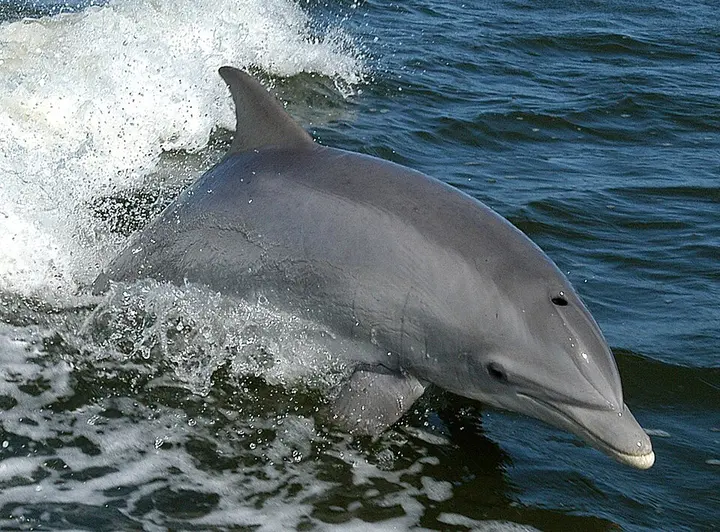
The common bottlenose dolphin or Atlantic bottlenose dolphin is one of three species of bottlenose dolphin in the genus Tursiops. While formerly known simply as the bottlenose dolphin, this term is now applied to the genus Tursiops as a whole. As considerable genetic variation has been described within this species, even between neighboring populations, many experts think additional species may be recognized and split out.
The common bottlenose dolphin is a very familiar dolphin due to the wide exposure it receives in captivity in marine parks and dolphinariums, and in movies and television programs. Common bottlenose dolphins inhabit temperate and tropical oceans throughout the world, absent only from polar waters.
Appearance
Common bottlenose dolphins have a grey coloration, a short beak, a single blowhole, and a hooked dorsal fin. The bottlenose is between 2 and 4 m (6.6 and 13.1 ft) long, and weighs between 150 and 650 kg (330 and 1,430 lb). Males are generally larger and heavier than females. In most parts of the world, adult length is between 2.5 and 3.5 m (8.2 and 11.5 ft); weight ranges between 200 and 500 kg (440 and 1,100 lb).
Behaviour
As a very social species, the common bottlenose dolphin lives in groups called pods that typically number about 15 individuals, but group size varies from pairs of dolphins to over 100 or even occasionally over 1,000 animals for short periods of time. Group structure depends on the sex and age of the dolphins, but may change depending on the group. Their geographic range dictates a lot of their behaviors including the densities of dolphins while traveling.
Diet
Its diet consists mainly of eels, squid, shrimp and a wide variety of fishes. It does not chew its food, instead swallowing it whole. Dolphin pods often work as a team to harvest schools of fish, though they also hunt individually. Dolphins search for prey primarily using echolocation, which is a form of sonar. The diet of common bottlenose dolphin pods varies depending on area. Along the U.S.
Habitat
Although dolphins inhabit every ocean of the planet including some rivers and other ecosystems, the common bottlenose dolphin can be found in the warmer oceanic regions specifically in temperate, subtropical, and tropical oceans around the world. The global population has been estimated at 600,000. Some bottlenose populations live closer to the shore (inshore populations) and others live further out to sea (offshore populations).
Life cycle
Mating behavior of the bottlenose dolphin is polygamous. Although they can breed throughout the year, it mostly occurs in spring, and with a 12 month gestation period mating season and birthing season overlap. Males form alliances, or pair bonds, to seek an estrous female and they attempt to breed the most while keeping other males away from viable females. For a chance to mate with the female, males separate the female from her home range.
Where the Common bottlenose dolphin lives
Recorded in United States of America, France, United Kingdom, Portugal, Spain, Mexico and Greece (North America and Europe).
Most records fall in Manche, Florida, Azores, South Carolina, Texas and Moray.
See the Common bottlenose dolphin’s range on the globe
Conservation status
Least concern (LC). Not at risk: it is doing well in the wild. Categories are the IUCN Red List as republished by GBIF.
Sources
The range is a density of 180,399 georeferenced GBIF records, shown on the continents where it is mainly recorded, not an expert-drawn map. Description from Wikipedia.